


Product Overview
A Medium Voltage Indoor Current Transformer (Indoor CT) is an instrument transformer engineered to convert high primary alternating current (AC) into standardized secondary current signals, typically 1A or 5A, for electrical measurement, energy metering, and protective relay applications.
Installed in medium-voltage air-insulated switchgear (AIS), ring main units (RMUs), and other power distribution equipment, indoor current transformers provide electrically isolated current signals for monitoring and protection systems.
Working Principle: The current transformer operates through electromagnetic induction. Primary current flowing through the primary conductor generates magnetic flux in the core, inducing a proportional current in the secondary winding. The transformation ratio is determined by the primary and secondary winding turns, subject to specified accuracy limits and operating conditions.
Structural Composition: The assembly consists of a magnetic core, copper secondary windings, insulated primary terminals, and a vacuum-cast epoxy resin body. Core materials, winding configurations, insulation systems, and terminal structures are engineered to meet specific electrical ratings and installation environments.
-
![LZZBJ9-10A1 Indoor Single-phase Current Transformer]() LZZBJ9-10A1 Indoor Single-phase Current TransformerThe current transformersare in accordance with GB20840.2-2014 and IEC60044-1 standards
Rated insulation level: 12/42/75kV
Rated secondarycurrent: 5A or 1A
Rated... -
![LZZBJ9-10Q B6 Indoor Single-phase Current Transformer]() LZZBJ9-10Q B6 Indoor Single-phase Current TransformerThe current transformers are in accordance with GB20840.2-2014 and IEC60044-1 standards.
Rated insulation level: 12/42/75kV
Rated secondary current: 5A or 1A
Ratedfrequency: 50Hz or... -
![LZZB9-24/180b/2 Indoor Single-phase Current Transformer]() LZZB9-24/180b/2 Indoor Single-phase Current TransformerThe current transformers are in accordance with GB20840.2-2014 and IEC60044-1 standards
Rated insulation level: 24/65/125kV
Rated secondary current: 5A or 1A
Ratedfrequency:... -
![LZZBJ9-35/250W1G1 Indoor Single-phase Current Transformer]() LZZBJ9-35/250W1G1 Indoor Single-phase Current TransformerThe current transformers are in accordance with GB20840.2-2014 and IEC60044-1 standards
Rated insulation level: 40.5/95/185kV
Rated secondary current: 5A or 1A
Ratedfrequency:...


Technical Specifications
|
Parameter Category |
Standard Specification Range |
|
Product Type |
Medium Voltage Indoor Current Transformer |
|
Highest Voltage for Equipment (Um) |
7.2kV / 12kV / 17.5kV / 24kV / 40.5kV |
|
Rated Frequency |
50Hz / 60Hz |
|
Rated Primary Current (Ipn) |
5A - 3150A (Customizable multi-ratio configurations available) |
|
Rated Secondary Current (Isn) |
1A or 5A |
|
Transformation Ratio |
Single-ratio or multi-ratio, subject to design |
|
Metering Accuracy Class |
0.2, 0.2S, 0.5, 0.5S (IEC / IEEE compliant) |
|
Metering Rated Burden |
Customizable VA ratings |
|
Protection Accuracy Class |
5P, 10P, PX, where applicable |
|
Accuracy Limit Factor (ALF) |
Customizable ratings (e.g., 5P20, 10P10) |
|
Protection Rated Burden |
Customizable VA ratings |
|
Rated Short-Time Thermal Current (Ith) |
Up to 40kA / 3s (Dependent on design and cross-section) |
|
Rated Dynamic Current (Idyn) |
2.5 x Ith (Peak current rating) |
|
Power Frequency Withstand Voltage |
20kV - 95kV (1min) |
|
Lightning Impulse Withstand Voltage |
BIL / impulse withstand levels up to 185kV |
|
Insulation Material |
Cycloaliphatic epoxy resin |
|
Installation Type |
Indoor switchgear installation |
|
Applicable Standards |
IEC 61869-1, IEC 61869-2; IEEE C57.13 where specified |
Construction & Manufacturing Process
Magnetic Core and Secondary Windings
Core Optimization: Toroidal cores are wound using cold-rolled grain-oriented (CRGO) silicon steel strips (0.23mm - 0.30mm) or nickel-alloy permalloy, followed by controlled nitrogen-atmosphere annealing to minimize core losses and stabilize magnetization curves.
Winding Configuration: High-conductivity copper secondary windings are distributed uniformly across the core. Independent secondary cores are engineered within a single body to support metering, protection, and monitoring simultaneously.
Epoxy Resin Insulation System
Vacuum Casting & APG: The insulation body utilizes a cycloaliphatic epoxy resin formulation processed under High-Vacuum Pressure Gelation (APG). This thermal-profile controlled casting eliminates internal micro-voids, ensuring high mechanical tensile strength and superior dielectric stability.
Primary and Secondary Terminals
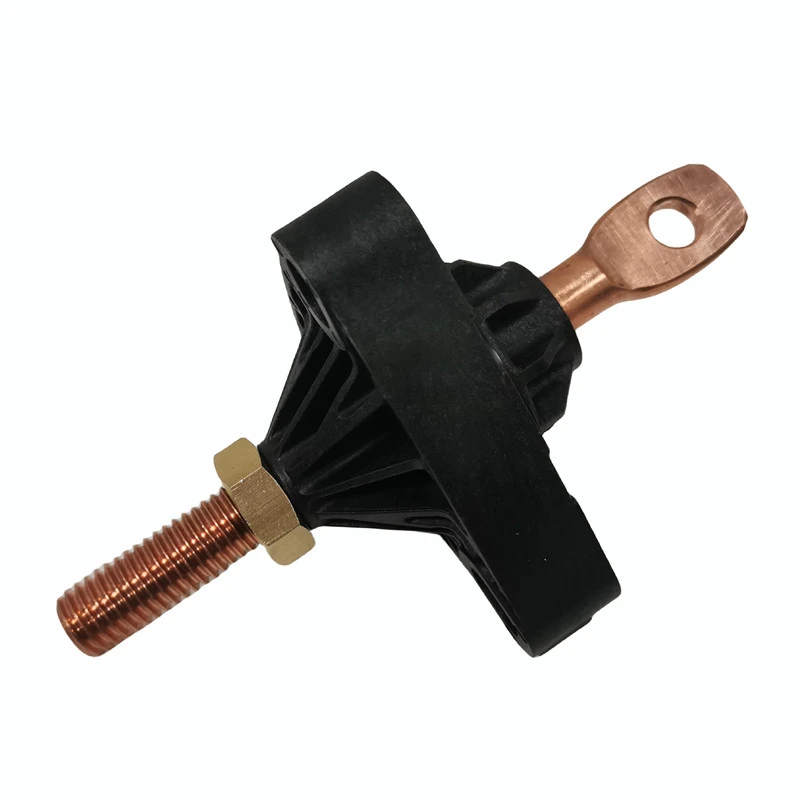
Interface Precision: Primary connection pads feature tinned electrolytic copper with standard M10/M12 bolt configurations to minimize contact resistance. Secondary connections utilize molded-in brass studs with sealable protective covers, supplemented by integrated stainless-steel grounding inserts.
Rated Current and Ratio Matching: Primary current should match operating load limits. Ensure secondary burden (VA) exceeds the total impedance of connected control cables and relay coils at the designated accuracy class.
Thermal and Dynamic Coordination: Verify that the Ith and Idyn ratings match the prospective short-circuit fault level of the switchgear busbar system for the specified clearing duration (1s or 3s).
Multi-Core Integration: Up to 5 independent secondary cores can be housed within a single epoxy body, enabling revenue metering, differential protection, and backup monitoring without increasing switchgear footprint.
Mechanical Clearance Check: Confirm overall dimensions, busbar window aperture, mounting pitch, phase-to-phase clearance, and installation orientation against switchgear compartment drawings prior to integration.
Quality Control & Testing Protocols
Transformation Ratio and Polarity Verification: Automated test benches verify turns ratio, polarity, and secondary winding resistance across every production unit.
Accuracy & Excitation Testing: Metering accuracy, composite error, and excitation curves (including knee-point voltage for PX protection classes) are tested against design specifications.
Partial Discharge (PD) Verification: Routine testing enforces strict partial discharge limits (≤ 10pC at specified test voltages) to guarantee long-term insulation integrity in sealed switchgear.
Type Test Verification: Full type-test documentation available covering temperature rise, lightning impulse voltage, and short-time thermal current endurance per IEC 61869-2 and IEEE C57.13.
Factory Test Documentation: Each shipment includes individual factory test reports detailing ratio error, phase displacement curves, magnetization logs, and routine test certificates.
Frequently Asked Questions

Request a Quote
To receive a technical proposal and quotation for a medium voltage indoor current transformer, please provide the following parameters:
1. System Requirements: Rated system voltage (Um), frequency (50Hz / 60Hz), and standard preference (IEC / IEEE).
2. Current Rating: Rated primary current, secondary current (1A or 5A), and transformation ratio configuration.
3. Accuracy & Burden: Metering / protection accuracy classes, rated burdens (VA), and ALF or knee-point voltage requirements.
4. Short-Circuit Ratings: Rated short-time thermal current (Ith), duration (1s / 3s), and dynamic current (Idyn).
5. Mechanical Constraints: Maximum overall dimensions, busbar window size, mounting pitch, and switchgear interface drawings.
6. Project Details: Project destination, required inspection/test documentation, quantity, and expected delivery schedule.
With abundant experience, Wenzhou Best Imp. & Exp. is one of the most professional indoor current transformer manufacturers and suppliers in China. Please feel free to buy durable indoor current transformer made in China here from our factory. Quality products and good service are available.
current transformer, LZZBJ9 10A1 Indoor Single phase Current Transformer, LZZBJ9 10Q B6 Indoor Single phase Current TransformerPopular Products


Rated insulation...