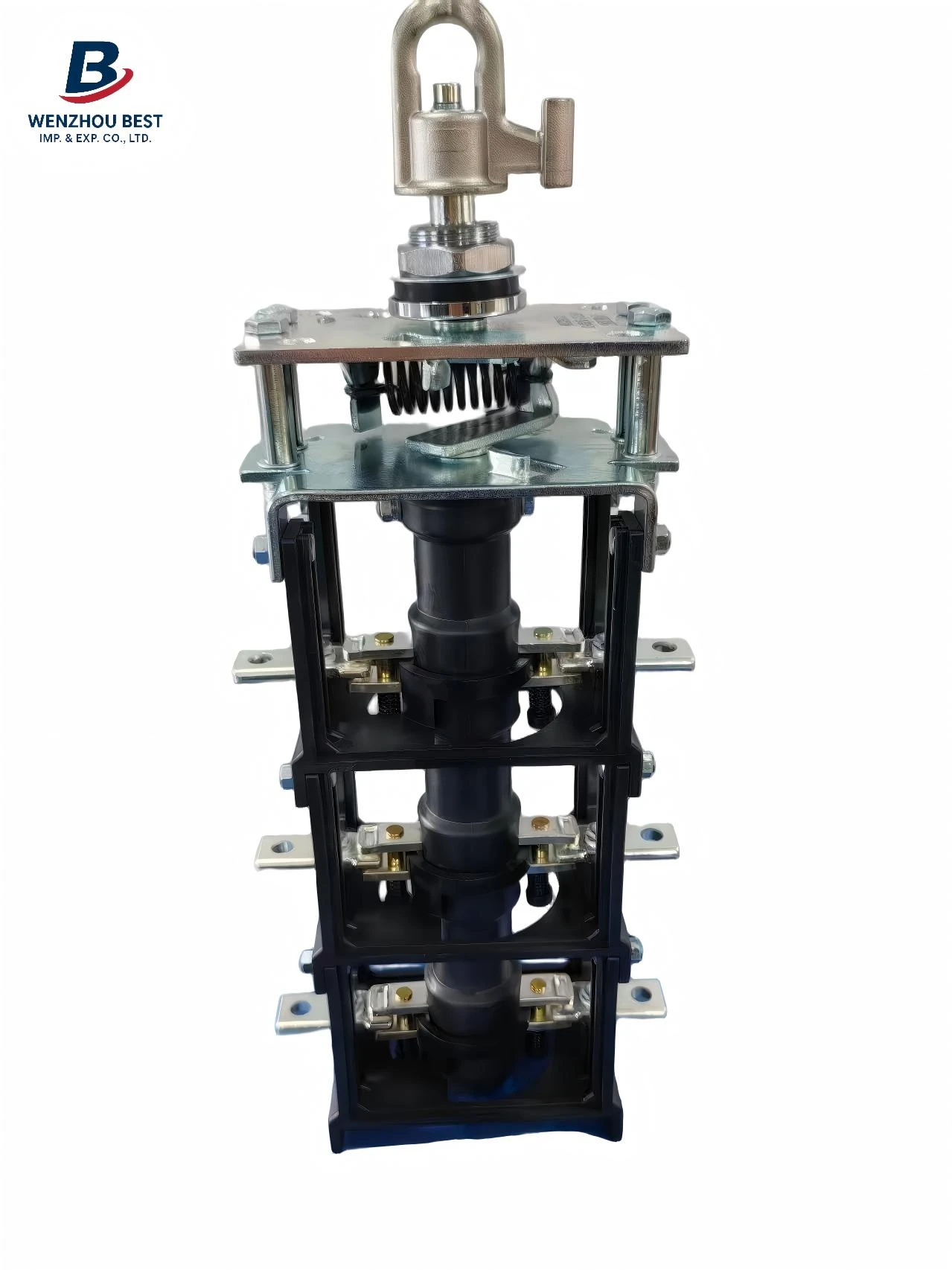
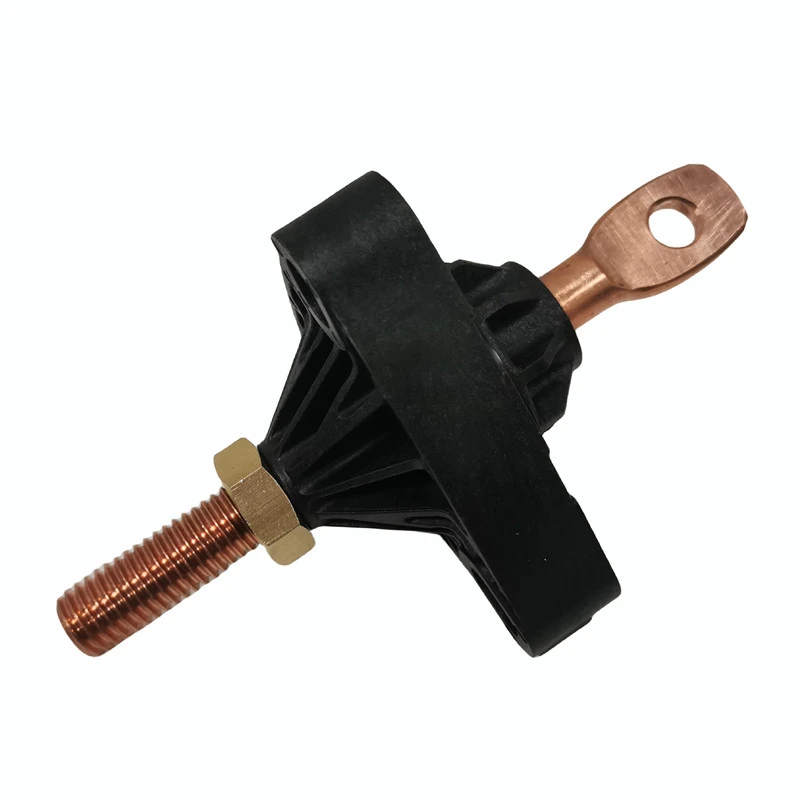
Clamp-type low-voltage bushings is a key component in electrical equipment used to connect wires and provide insulation protection; they are commonly used in oil-soaked transformers, distribution equipment and industrial power systems. Because these bushings operates in a live environment for a long period, the installation quality directly affects the insulation performance, sealing integrity and operation stability of the equipment.
As a professional supplier of clamp-type low-voltage bushings, we recommend that customers do not just consider size compatibility when installing. Factors such as the installation environment, connection methods, sealing requirements and future maintenance needs must also be considered to prevent oil leakage, degradation of insulation or equipment malfunction due to improper installation.
1.Verify compatibility between bushing model and device parameters prior to installation
Before installing a clamp-type low-voltage bushing, confirm that the bushing specifications meet the design requirements of the electrical equipment.
Highlights include:
Whether the rated voltage meets the operation requirements of the equipment;
whether the rated current meets load requirements;
whether the bushing size is the same as the mounting hole;
Whether the fixture structure is suitable for the device interface;
-insulation class is suitable for operating environment.
Different transformers and different types of distribution equipment have different requirements for low-voltage bushing dimensions and electrical performance. Incorrect model selection, even if the installation itself is perfect, can lead to problems such as excessive temperature or poor sealing during operation.
2.Check the appearance and integrity of the bushing before installation
Clamp-type low-voltage bushings may be impacted or vibrated during transport and therefore requires thorough inspection prior to installation.
Highlights include:
-Inspecting insulation parts for cracks or damage;
Check whether the conductive rod is deformed.
-Verification of the completeness of the clamp assembly;
-Checking gaskets for damage;
-Ensure all connection bolts and attachments are in place.
Particular attention should be paid to insulation components. During long-term operation, even small cracks will gradually expand under the influence of electric field, which will affect the bushing's insulation performance. Keep the installation area clean to prevent impurities from damaging the seal.
The installation site of clamped low pressure bushing usually involves an internal oil circuits or insulation zones, so the connection area must be thoroughly cleaned before installation.
Delete the following:
Dust;
Metal fragments;
cinders;
Construction junk.
When clamped, impurities on the surface of the seal can cause uneven contact, causing the seal to fail, oil leakage or moisture to enter the device.
As suppliers, we advise our customers to avoid placing bushing in wet or contaminated environments when installing on site to avoid compromising product performance.
4. Install sealing components correctly to prevent oil leakage
Sealability is an important aspect of installation for clamping clamp-type low-voltage bushings used in oil-immersed transformers.
Key installation considerations:
Verify that the correct gasket model;
Check that the sealing surface is smooth and smooth.
-Ensure that the gasket are in the correct position;
- Tighten the fixture evenly according to specifications.
Uneven clamping force will lead to inadequate local pressure on the gasket, resulting in leakage during operation of the equipment.
Conversely, the seal should not be too tight, otherwise the sealing material will be deformed, affecting long-term sealing effectiveness.
5. Apply appropriate force when fastening fixtures
The fixture is an important structural component to ensure the safety of the low-voltage bushing. The tightness of its installation directly affects the bushing's stability.
The following should be noted during installation:
Gradually tighten bolts in the specified sequence;
Ensure that clamping force is evenly distributed;
Avoid one side being too tight.
-Prevent bushing instability due to loose mounting.
Insufficient clamping force may loosen the connection due to operating vibration, while too much clamping force could damage insulation components or the sealing structure.
6. Ensure reliable electrical connections
Clamp-type low-voltage bushings not only has the insulation function, but also must ensure the steady current transmission. When installing electrical connectors, ensure the following:
Keep Conductive contact surfaces clean;
The terminal contacts are good.
Bolt connection meets specified tightening requirements;
- Avoid exposure to excessive resistance.
If the connection is unsafe, local overheating may occur during the operation of the equipment, ultimately affecting the service life of the bushing and related electrical components.
7. Post-installation insulation and operation inspection
After installation, perform necessary tests to ensure that the bushing is ready for normal operation.
Common inspection items include:
Check that the bushing is securely installed;
Check for leaks at sealing points;
Test insulation performance as required;
-Verification of electrical connections;
-Monitoring of heating anomalies during initial operation.
For critical electrical equipment, it is recommended that testing be carried out in accordance with relevant electrical safety standards to ensure reliable operation.
8. Develop maintenance plans based on the operating environment;
The installation a clamp-type low-voltage bushing does not mean that long-term inspection is not required. Different operating environments have different effects on the bushing.
For example:
Outdoor equipment needs to be moisture-proof and anti-ageing.
High-load equipment requires temperature monitoring;
-Industrial environments require attention to the effects of dust and corrosion.
Periodic inspections are recommended:
-Clamp tightness;
-Cracks the bushing surface;
Sealpoint leakage;
The connection point-Abnormal heating.
Timely maintenance can reduce the risk of equipment failure and prolong the service life of the bushing.
FAQs: FAQs about clamping low voltage bushing installation
Q1: What preparations should be made before installing a clamp-type low-voltage bushing?
Verify product type, device interface dimensions and voltage/current rating; also check that the bushing and attachments are complete and undamaged.
Q2: Why is sealing important when installing clamp-type low-voltage bushings?
Because some bushings are installed in oil-soaked equipment, poor sealing can lead to oil leaks or moisture ingress, affecting the equipment's insulation performance.
Q3: Can users replace or install clamp-type low-voltage bushings? As this is related to the safe operation of electrical equipment, it is recommended that it be installed and tested by qualified professionals in accordance with equipment specifications.
Question 4: What should I do if I find a oil leak in the bushing after installation?
Immediately inspect that the gasket, clamps and mounting positions are correct; adjust or replace seals as necessary.
Q5: Does the clamp-type low-voltage bushing require regular maintenance?
Yes. ' Regular inspection of connection, sealing and insulation status helps to ensure the long-term stability of the equipment.
Wenzhou Best Imp. & Exp. Co., Ltd is an international company based on Wenzhou Bacet Medical Equipment Co., Ltd and Queqing Chencheng Electric Co., Ltd.
Wenzhou Bacet Medical Equipment Co., Ltd is founded in 2003, is a high-tech enterprise specializing in the R&D and manufacturing of medical devices, IVD reagents, and automated production equipment. Certified with ISO 13485 and ISO 9001, the company operates advanced facilities including a Class 100,000 cleanroom and sterile laboratory.
Queqing Chencheng Electric Co., Ltd is founded in 2018, focuses on the production and R&D of oil-immersed transformer components, including oil-immersed two-position load switches, four-position load switches, de-energized tap changers, backup fuses, fuse holders, transformer bushings, ANSI porcelain bushings, and sampler valves.