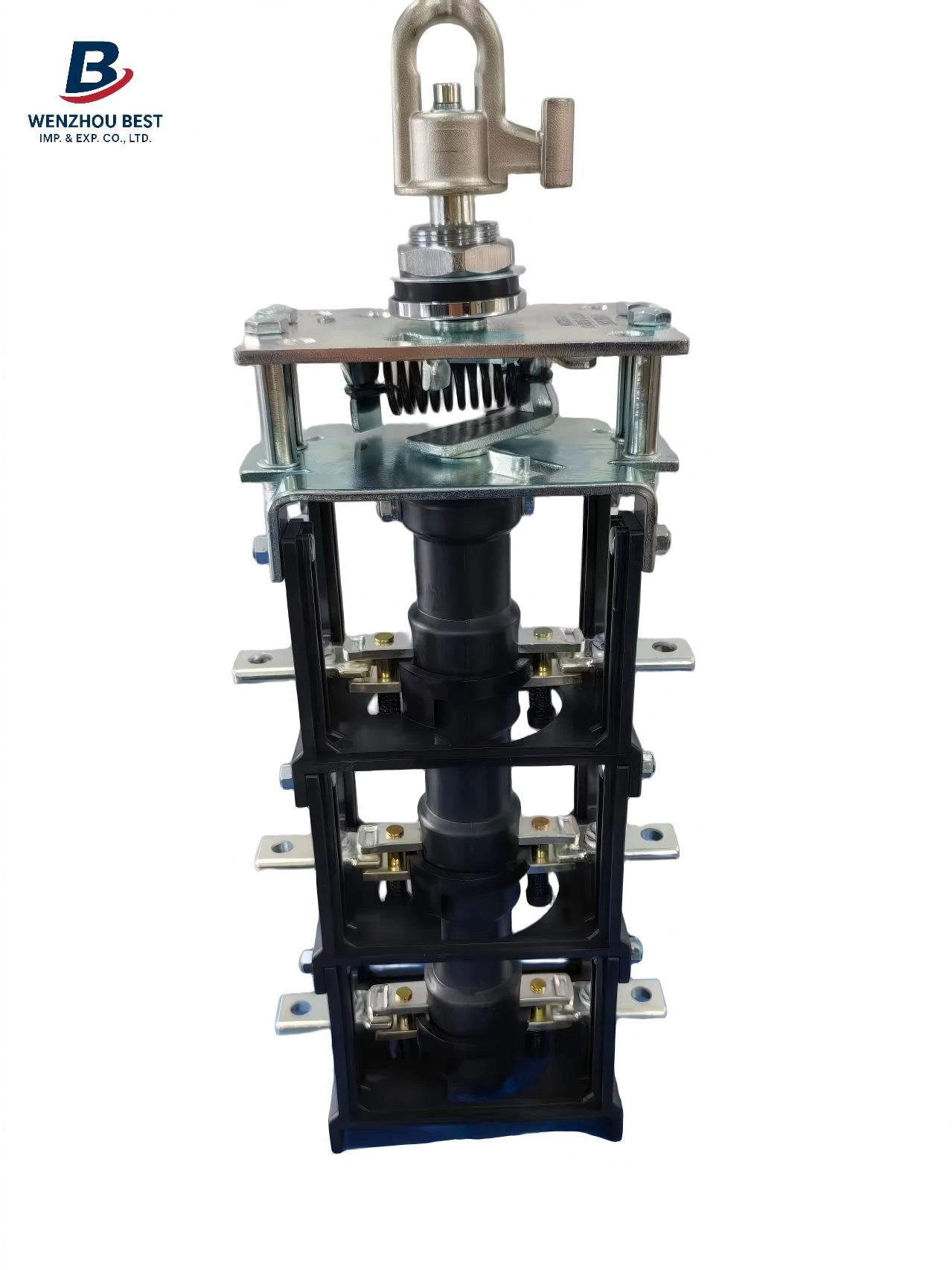
A box-type transformer is more than just a transformer; it functions as a compact substation-specifically a distribution station - that supplies power directly to end-users. It comprises three main compartments: a high-voltage (HV) compartment, a transformer compartment, and a low-voltage (LV) compartment. The HV compartment serves as the power input side-typically receiving incoming lines of 35 kV or 10 kV-and houses components such as high-voltage busbars, circuit breakers (or fuses), voltage transformers, and surge arresters. The transformer compartment contains the transformer itself, which constitutes the core equipment of the box-type unit. The LV compartment houses low-voltage busbars, low-voltage circuit breakers, metering devices, surge arresters, and other components; power supply lines are routed from these low-voltage busbars to distribute electricity to users.
The protection system for a box-type transformer is specifically designed to safeguard the transformer unit. It is a high-tech power automation product-developed through integrated R&D-that consolidates multiple functions, including protection, monitoring, control, and communication, into a single unit. As such, it serves as the ideal electrical module for constructing intelligent box-type transformer systems. The product features an embedded protection library comprising over twenty standard protection schemes, and it possesses robust, comprehensive data acquisition capabilities for both analog (voltage and current) and digital (switching status) signals from the primary equipment (with current measurements facilitated via dedicated protection current transformers).