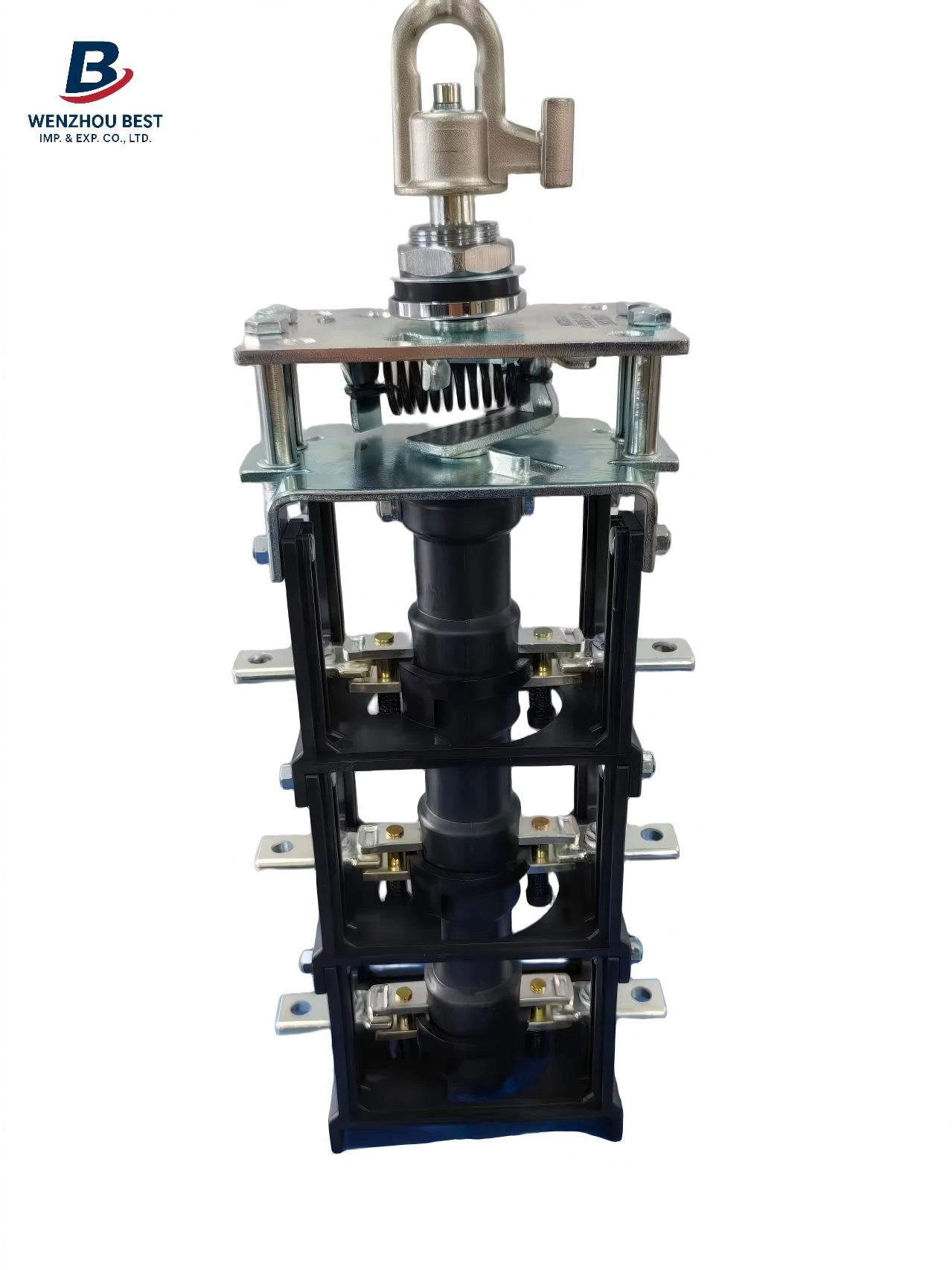
A pole-mounted transformer is a type of distribution transformer installed on utility poles or towers, serving as a critical component within high- and low-voltage power distribution systems. It is typically used to step down the voltage from high-voltage distribution lines (e.g., 10 kV or 20 kV) to low-voltage levels (e.g., 380 V/220 V), thereby directly supplying power to residential areas, commercial establishments, or small industrial users. It derives its name-"pole-mounted transformer"-from the fact that it is installed directly on a utility pole.
Pole-mounted transformers are typically compact in structure and lightweight; they are predominantly manufactured with either oil-immersed or dry-type insulation designs. Oil-immersed pole-mounted transformers utilize transformer oil for both insulation and heat dissipation, offering robust resistance to overloads. Conversely, dry-type pole-mounted transformers are frequently deployed in urban settings or specialized environments, where they are prized for their high safety standards and the absence of any leakage risks.
The pole-mounted installation method conserves ground space, making it an ideal solution for power distribution in residential communities, rural areas, or along roadways; it also facilitates ease of maintenance and system expansion. These transformers are typically equipped with ancillary devices-such as fuses, surge arresters, and grounding systems-to ensure operational safety and provide comprehensive line protection.