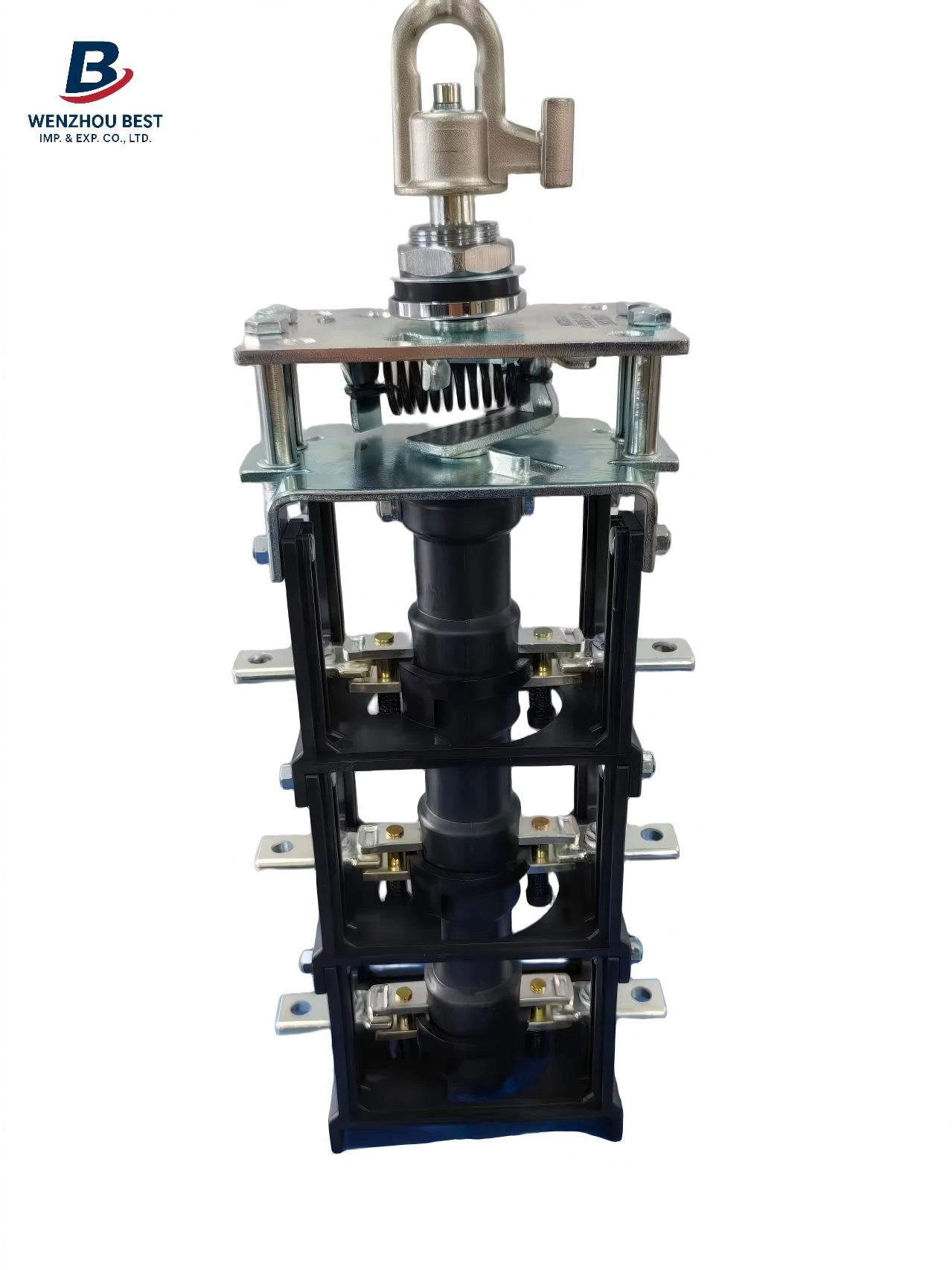
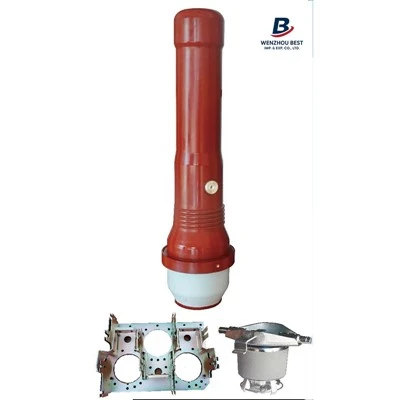
The core purpose of the capacitive sensor built by Wenzhou Best Imp. &Exp. Co., Ltd into a high-voltage bushing is not to "store electrical energy," but rather to utilize the principle of capacitive voltage division to obtain a low-energy voltage signal proportional to the primary high voltage from the high-voltage conductor. This signal is used for voltage detection, live display, and voltage measurement.
So how exactly does it work? Let Wenzhou Best Imp. &Exp. Co., Ltd engineer teamexplain: after the voltage on the high-voltage side is divided by the capacitor, a very low voltage signal is obtained at the capacitive test point.

For example, when the 35kV 600A Deadbreak Bushings https://www.besthvelectric.com/transformer-components/high-voltage-bushing/35kv-600a-900a-deadbreak-apparatus-bushing.html are installed on the Pad Mounted Transformer:
If the primary side is energizedthe (-35 kV ON), the primary voltage is 35 kV, after capacitive voltage division, the voltage at the capacitive test point may only be in the tens of volts or even lower, depending on the capacitor structure and the associated VDS such as CAPDIS, VOIS, or equivalent systems, displays "Voltage Present"
If the primary side is de-energized (-35 kV OFF), the induced signal at the capacitive test point disappears/decreases, VDS displays "Voltage Absent".
Therefore, the energization status of the high-voltage side connected to the high-voltage bushing can be directly determined via VDS.
This provides very effective assistance for safe operation and power maintenance.