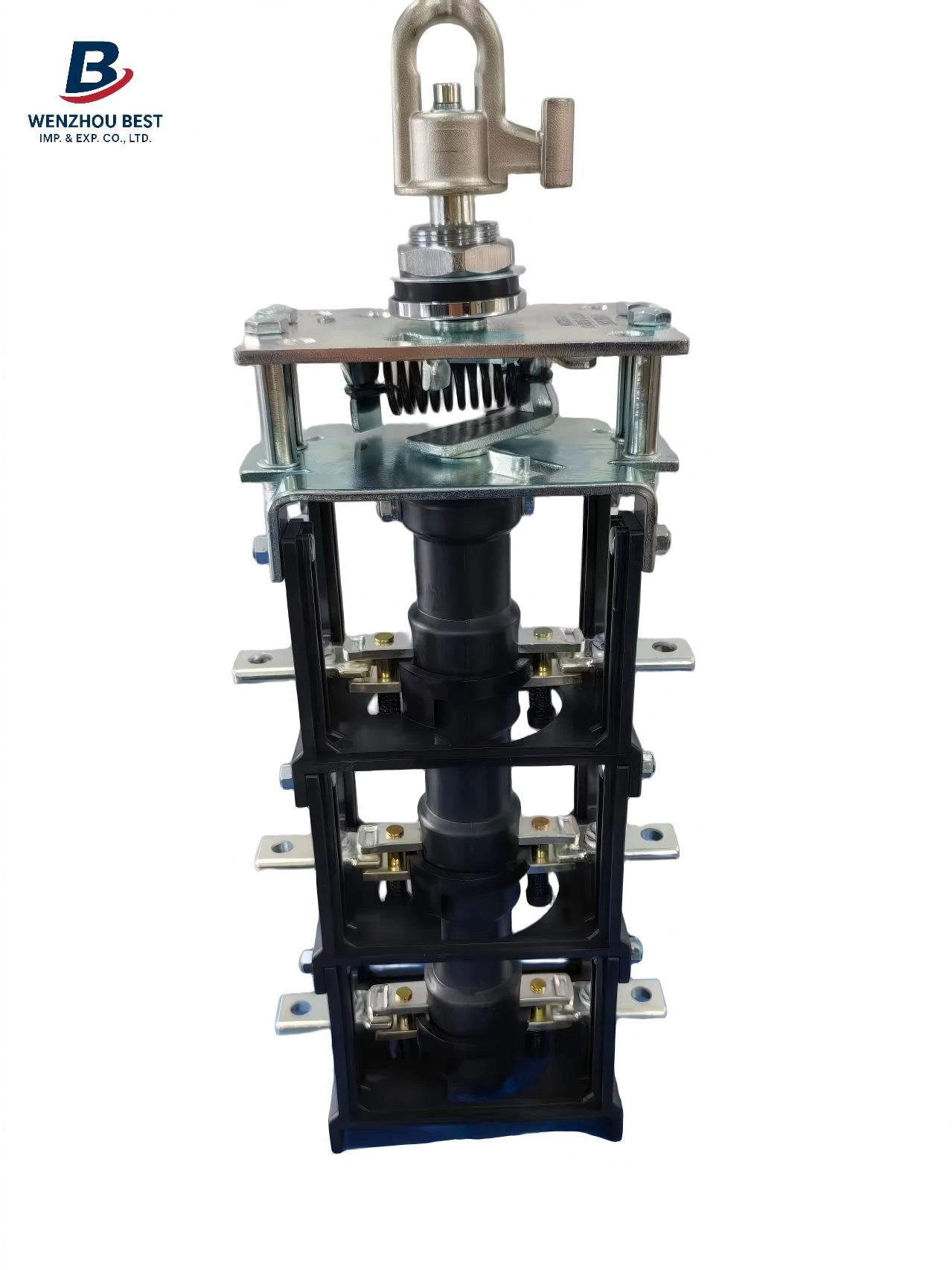
Prior to being commissioned for operation-or while held as spare parts-the storage conditions for current transformers (CTs) play a critical role in preserving their performance integrity. They should be stored in a dry, well-ventilated indoor environment, shielded from direct sunlight and exposure to rain. Furthermore, they must be kept away from areas containing corrosive gases, excessive dust, or strong electromagnetic interference to prevent the aging of insulation materials or damage to metal components. The temperature and humidity of the storage environment must also be maintained within reasonable limits; excessive humidity can easily lead to a degradation of insulation performance, thereby compromising subsequent operational safety.
Regarding storage methods, CTs should be positioned securely-taking into account their specific structural characteristics-to prevent tilting, physical impact, or severe vibration. For split-core or toroidal transformers, particular care must be taken to protect the iron core and secondary windings, guarding against mechanical damage or deformation of the wiring terminals. Additionally, the terminals of the secondary windings should be kept short-circuited or fitted with protective measures to prevent the generation of dangerously high voltages caused by accidental open circuits, which could result in equipment damage or safety hazards. During long-term storage, the condition of the equipment should be inspected periodically to verify the absence of moisture ingress, corrosion, or insulation degradation.
From a management perspective, a standardized system for inventory control (inbound and outbound tracking) and periodic inspections should be established. Each current transformer should be assigned a unique identification number and registered, with records detailing its model, manufacturing date, and inspection status. For equipment that has been in storage for an extended period, necessary electrical performance tests-such as insulation resistance measurements and turns ratio verification-must be conducted prior to commissioning to ensure that its performance meets operational requirements. Through scientific and systematic storage management, the service life of current transformers can be effectively extended, thereby safeguarding the stability and safety of subsequent power system operations.