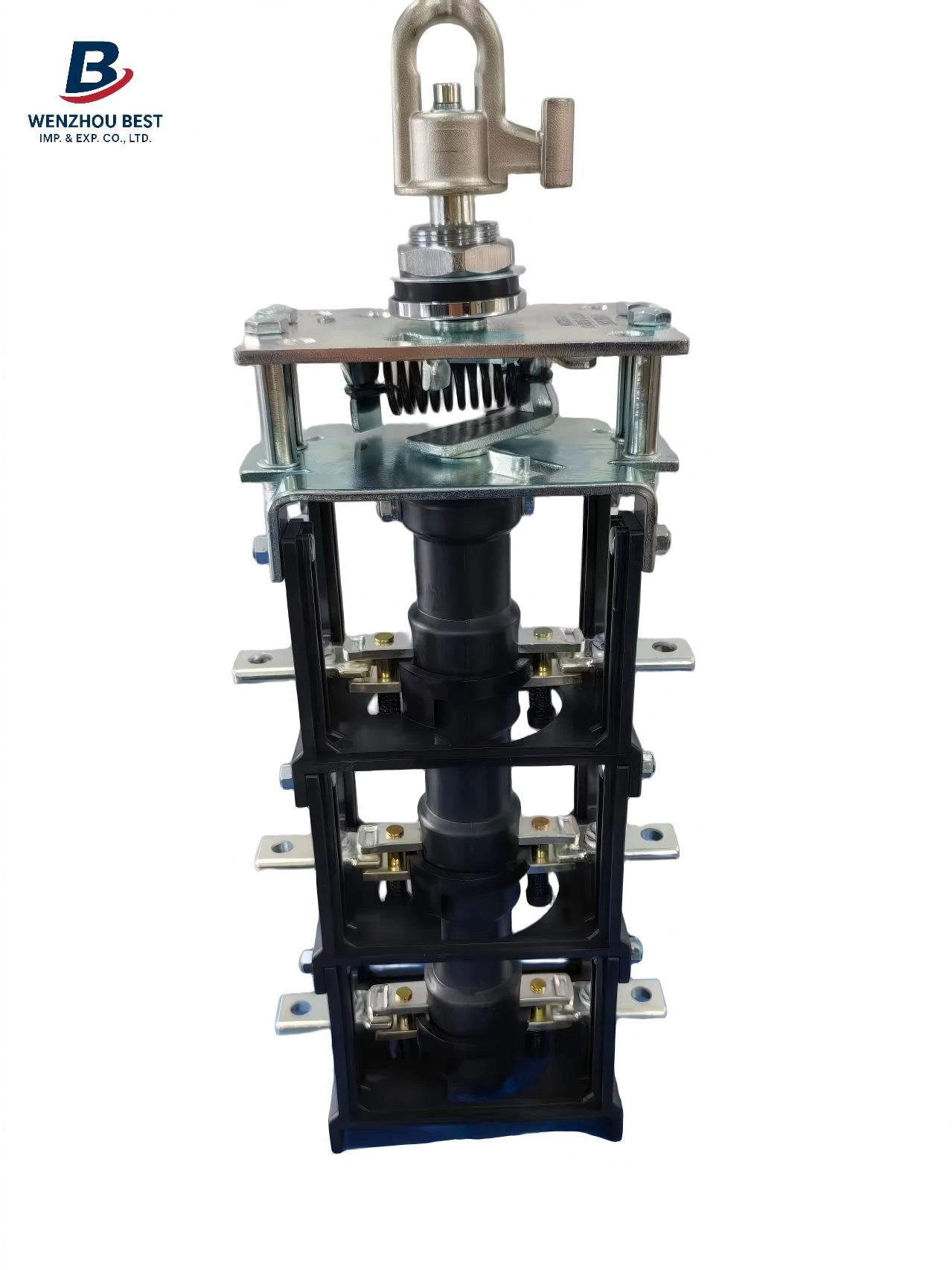
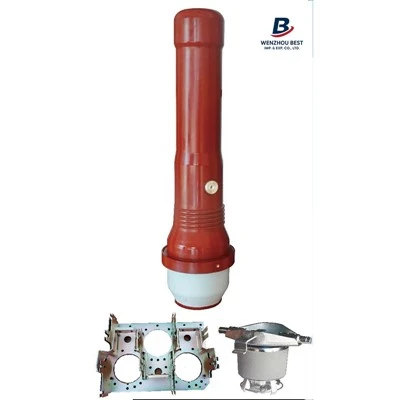
First, understand "applied logic."
To determine the optimal location of a a 35kV insulated fuse Chamber, two key product characteristics must be mastered: first, "current-limiting protection" -an internal high-voltage restricted current fuse that forcibly interrupts circuits before the short-circuit circuit current peaks, with high fracture capacity and fast operation; and second, "insulation and isolation" -a fuse box that utilizes solid or composite insulation structure to seal and isolate active parts, ensuring a high level of protection and safety margin against shock.
This leads to a simple formula for application: any 35kV circuit that requires a combination of "compact layout, fast protection and high security" is the suitable choice for an insulated fuse room. * Examples of specific use are detailed below.

II. Five typical substation scenarios
1.35kV Station Service Transformer Protection
station service transformer is the "heart"of the substation's power supply, although its capacity is usually modest, but if it breaks down, it will cause the whole operation of the substation power loss. The use of insulated fuse chambers for primary protection is more cost-effective than circuit breaker solution while reliably shorting out internal transformers, making it the most cost-efficient option.
2.Shunt Capacitor Bank Protection
When Capacitor banks are shut down and internal component breakdown, it is easy to generate high inrush currents of water, leading to a high frequency of failures in substations. The containment capacity of the fuse chamber keeps fault current to a minimum and prevents the fault from spreading to series reactors or the 35kV busbar, thus safeguarding the entire busbar section.
3.Voltage Transformer (PT) circuit
A short circuit in the PT secondary winding or an internal failure of the PT itself can trigger an a "sympathetic trip" (upstream circuit breaker Jump), causing a complete voltage loss throughout the substation. The insulated fuse room provides a separate, visible backup short-circuit protection PT for easy fault localization and isolation.
4. Feed and Branch Circuits
In radial 35kV distribution networks, the insulated fuse chamber acts as a protective unit at the top of the line. It also incorporates the "visible break" function for disconnecting switches, making visual confirmation visible during maintenance and ensuring greater safety for operations and maintenance personnel. Pre-fabricated / Box-type Substations
These substations face severe space constraints and are often located in outdoor areas accessible to personnel. The insulating chamber is compact and has an intake protection rating of IP54 or above, which satisfies the requirement of small area and high safety of box substation.
III. Application Scenarios Based on Environmental Conditions
Outdoor and semi-outdoor substations: With an insulated fuse chamber and an UV-resistant housing, you don't need a dedicated structure.
High Altitude, High Humidity, High Salt Fog and Heavy Pollution Areas: Solid insulation components have excellent pollution resistance and anti-aging properties; they significantly reduce the risk of pollution flashover and condensation compared to open layouts.
Adaptation and capacity expansion of existing stations: The high modularity of the insulation chamber allows it to be connected to existing switchgear with little or no power interruption, thus reducing the retrofit window.

IV. INTRODUCTION Key Considerations for Scenario-Based Selection
Different conditions require different priorities: for station service transformers and capacitor banks, emphasis is placed on rupture capacity (typically ≥31.5 kA) and matching fracture characteristic curves; for outdoor box substations, emphasis is placed on IP rating and temperature rise; and for high altitude areas, external insulation clearances must be adjusted for height. It is recommended to calculate the maximum short-circuit current and then determine the rated current of the fuse and the rated current of the combustion chamber.
Frequently Asked Questions
Q1: Can an insulated fuse cavity be used in a 10 kV system?
The product is designed with a specific voltage classes of 40.5 kV for a 35 kV insulated fuse cell and cannot be "downgraded" for use in a 10 kV systems. The fuse chamber with the corresponding voltage rating should be selected for application at 10 kV.
Question 2: Do indoor substations need an "insulated" chamber?
A standard compartment is sufficient if the switchgear itself provides adequate protection and maintenance to meet standards; however, the safety redundancy provided by the insulation is still valuable in areas with limited space, accessible locations or retrofit projects.
Q3: What should be considered when selecting a fuse chamber for a capacitor banks?
The key is to verify the non-melting current and melting characteristics of the fuse to ensure that it can withstand closing inrush currents while preventing cascading explosions in the event of an internal capacitor fault. Q4: How to adjust the parameters at high altitudes?
For every 1,000 meters of elevation, the level of external insulation must increase by approximately 8%–10%; if necessary, choose products that enhance insulation or increase air clearance distances.
Q5: How long would it take to retrofit an existing substation?
Insulated fuse Chambers are typically designed with modular plug-ins that take just a few hours to modify; the impact can be minimized through load transfer arrangements.
Q6: Can intelligent monitoring capabilities be integrated?
Yes. ' Wireless temperature monitoring and partial discharge sensors can be installed inside the insulation chamber to transmit data to the substation's condition-based maintenance system for predictive maintenance.