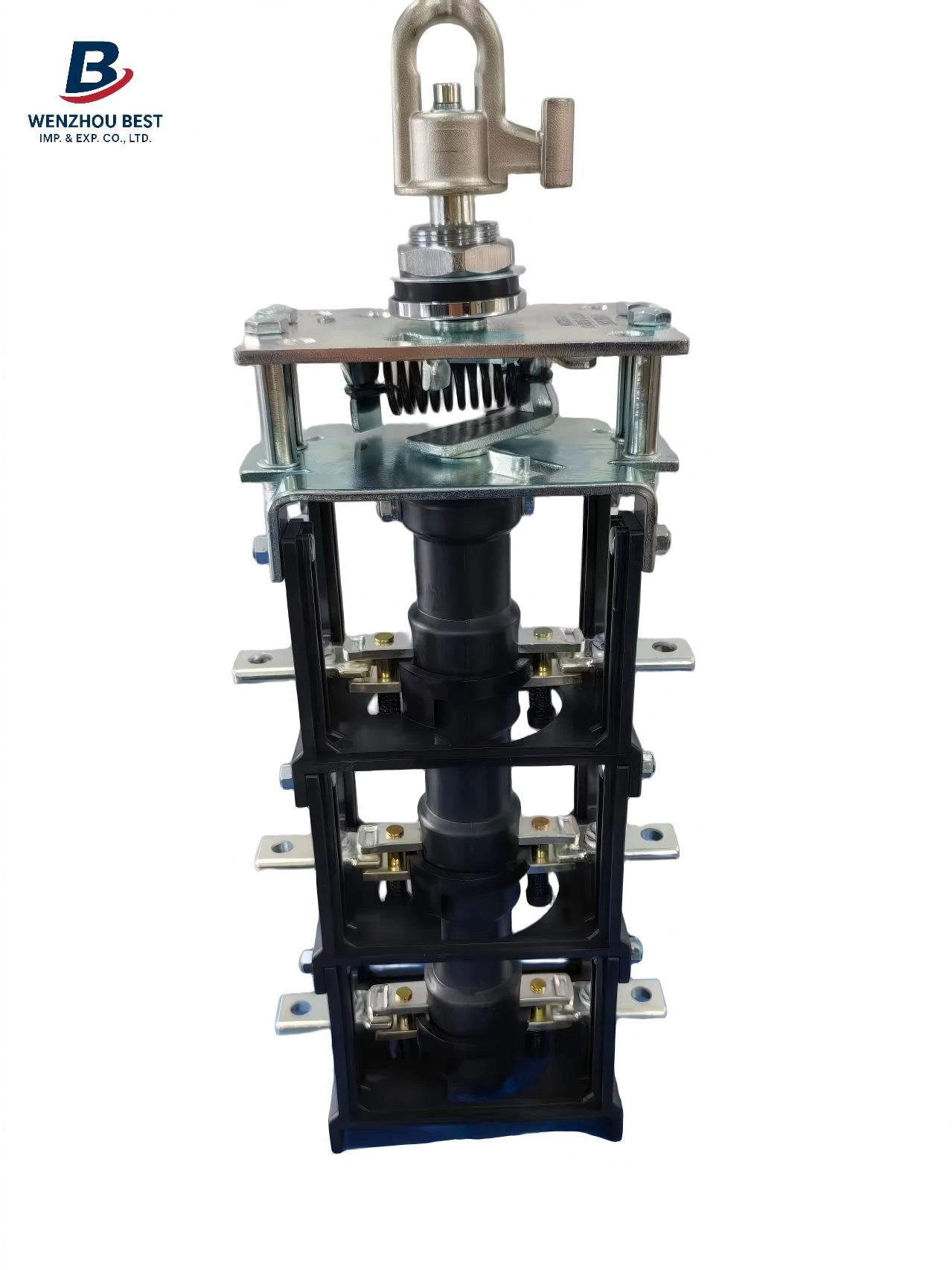
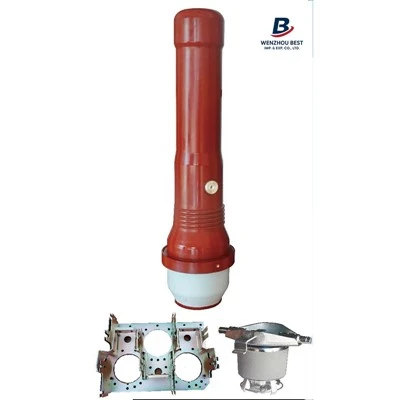
I. What is a 35kV Insulated Fuse Chamber?
In the distribution system of a 35kV substation, the 35kV insulated fuse compartment is the key electrical equipment which combines isolation, protection and circuit breaking. It is usually installed in the fuse box of a a 35kV Insulated Fuse Chamber or box substation and contains a high-voltage flow limiter, insulated bracket, contact system and live wire indicator. "Insulation" is a core feature of the product compared to traditional open-type fuses; the insulation is made of solid insulation (e.g. cast epoxy resin or SMC insulating barriers) or a gas/composite insulation structures that effectively separates the electrified components from the operator and adjacent insulation, thereby significantly improving safety margins and meeting protection requirements under all operating conditions.

II. Principles of work
The core protective element of the 35kV insulated fuse compartment is the high-voltage current-limiting fuse. Its operation consists of three phases:
1.Normal Conduction State: the system's load current forms a circuit through the fuse element, contacts and busbar; the fuse exhibits minimal impedance and the temperature rise stays within design range.
2.Fault Detection and blowing: When a protective circuit shorts or is severely overloaded, the fault current rises rapidly in milliseconds. As the joules heat up, fuse element heats up dramatically, melting in its weakest section to create an arc.
3.(c) Current Limiting, Arc Extinguishing and isolation: The current-limiting fuse's unique "metallurgical effect" and sand-filled arc suppression structure of a current limitation fuse forces the arc to be cut off before the current reaches its peak (i.e. "flow limitation"). Arc energy is absorbed and dissipated by quartz sand, fault circuits are permanently isolated, and upstream equipment and other parts of the system are unaffected.
It is worth noting that the insulation design of the fuse chamber does not participate in arc extinguishing, but acts as a isolation barrier to prevent electrocution, two-phase short-circuit and condensation related problems. When the fuse operates and the fuse tube requires replacing, operators and maintenance personnel can safely operate within the physical protection of the insulated housing, eliminating the need to completely substation shutdown.
III. Main applications in substations
35kV Insulated Fuse Chamberis widely used in substations because of its small size, high crushing capacity (above 31.5 kA) and stable protection performance.
station service transformers protection: because the capacity of 35 kV station service transformers is generally modest, using fuse housing for power side protection is economical and can quickly remove transformer internal faults.
Protection of shunt capacitor banks: Capacitor energization inrush currents and internal fault are common faults; the limiting characteristics of fuse enclosure effectively control fault propagation and protect series reactors and busbar.
Voltage transformer and lightning arrester circuits: provides short circuit backup protection for the secondary and main components of the voltage transformer to prevent "crosswind" (upstream circuit breaker) tripping caused by television fuses.
Feeder and branch circuits: provides isolation capabilities and visible breakpoints in the radial distribution networks as protection for line heads.
Box-type and pre-fabricated substations: Box substation is a compact structure, high protection level, is an ideal choice for confined space, outdoor installation of compact substation.

IV. INTRODUCTION Additional value of the Insulation Design
Adopting an insulated fuse housing brings three main benefits to substations. First, enhanced safety redundancy-meeting IP4X or higher protection standards-reduces the risk of operational errors. Second, extended maintenance-free intervals, insulation with anti-pollution and anti-aging properties, suitable for high altitude, high humidity or salt fog areas and other harsh environments. Third, smart grid compatibility; temperature sensors and partial discharge monitoring units can be integrated into the housing to provide data to support conditions-based maintenance.
Frequently Asked Questions
Question 1: To what extent can fuse enclosure interrupt the short-circuit current?
It is usually equipped with a 35 kV current-limiting fuse with a rated capacity of 31.5 kA; however, specific selection must be verified against the substation's maximum short-circuit current and, if necessary, 40 kA-rated products may be selected.
Must the entire assembly be replaced after the fuse is blown? No. You simply disconnect the isolating contacts and replace the fuse tube at a specific stage. The insulating chamber is designed to ensure safety during single-cell operations without affecting the operation of other circuits.
Q3: What is the difference between an insulated fuse box and a standard fuse box?
The core difference is the "insulation"-in the former case, the electrified components in the compartment are encased in solid or composite insulating materials, providing a higher level of protection and shock safety, making it ideal for compact layouts and areas accessible to people.
Q4: Can it be used for outdoor substations?
Yes. ' It can be used in outdoor box or prefabricated substations by selecting an insulated fuse chamber with an an IP54 (or higher) protection rating and an UV-resistant housing.
Question 5: What are the most critical parameters to select?
Key parameters to be considered include rated voltage (40.5 kV), rated current (fuse to load match), fracture capacity, fuse characteristic curve (e.g., g-type or gG-type) and temperature rise limit values.
Question 6: How to determine if the fuse has been activated?
Indicators include loss of voltage indication on compartment door display, activation of fault indicator or analysis of historical data of intelligent temperature monitoring module. It is forbidden to open the compartment door without verifying the voltage and isolation circuit.