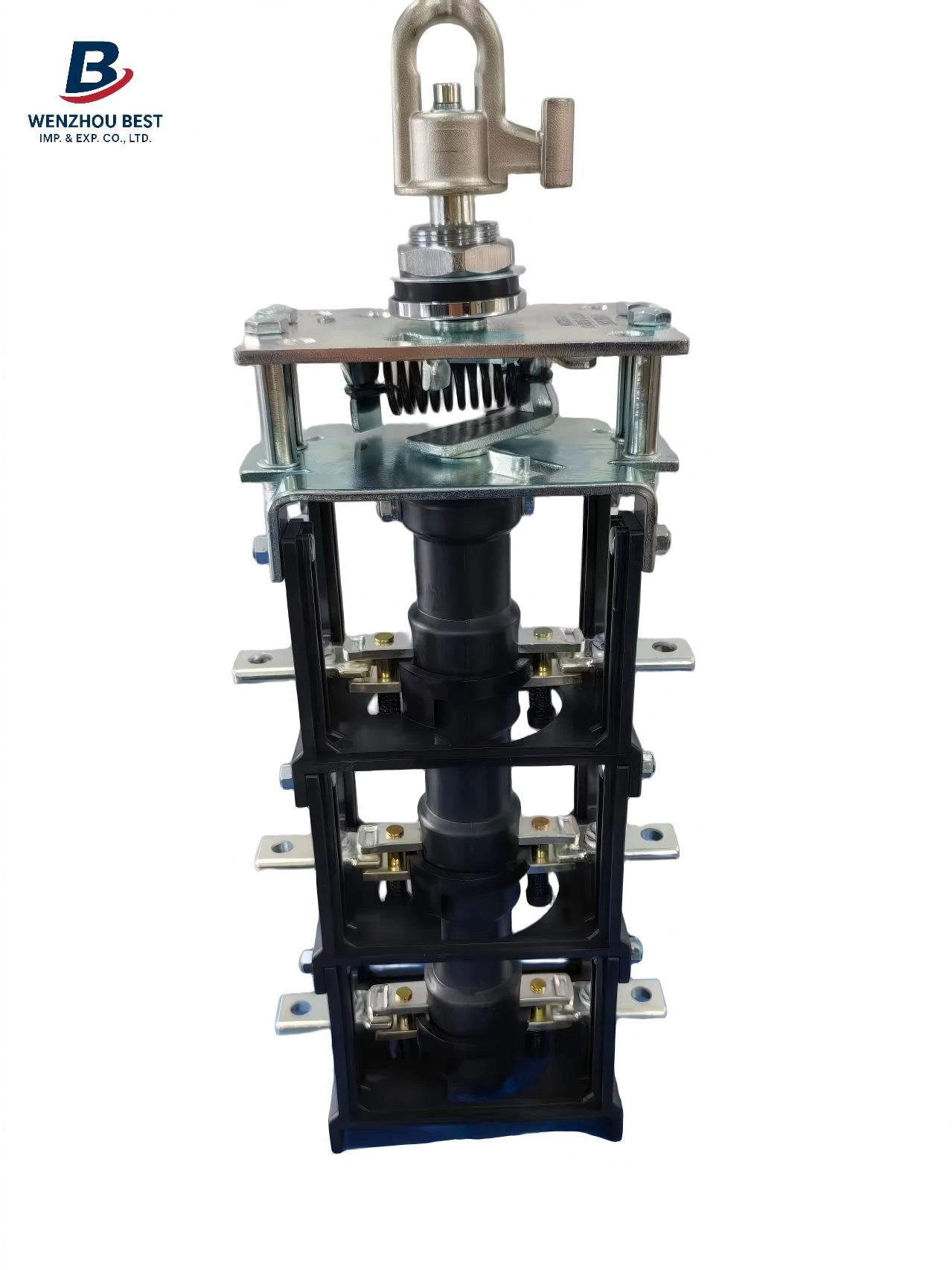
The key technologies for cable accessories primarily focus on three aspects: ensuring electrical safety, mechanical reliability, and long-term operational stability. These technologies directly determine the performance of the accessories within power systems.
Insulation and Stress Control
Cable accessories must be capable of withstanding rated voltages as well as transient overvoltages, while simultaneously preventing partial discharge and insulation breakdown. To achieve this, high-voltage accessories typically employ stress control tubes, shielding layers, or graded insulation designs. By optimizing electric field distribution and insulation structures, these techniques mitigate electric field concentration, thereby ensuring the long-term stability of insulation strength at cable terminations or joints.
Materials and Environmental Resistance
Accessory materials are required to possess properties such as high dielectric strength, aging resistance, tolerance to extreme temperatures, flame retardancy, moisture resistance, and UV resistance. Modern accessories frequently utilize composite materials-such as silicone rubber, epoxy resin, or cross-linked polyethylene (XLPE)-that have undergone modification and formulation optimization to enhance their weather resistance and mechanical strength. This enables the accessories to operate stably over extended periods in outdoor, humid, or industrially corrosive environments.
Manufacturing and Testing
The production of high-quality accessories necessitates precision molding and rigorous quality control. This encompasses manufacturing processes such as compression molding, injection molding, and vacuum casting, as well as post-production testing involving electrical performance assessments, partial discharge detection, voltage withstand tests, and mechanical property inspections. These technologies ensure that the accessories feature a compact structure, uniform insulation, and mechanical robustness, thereby guaranteeing their safety and reliability within high-voltage power systems.