China Transformer Tap Changer supplier, Wenzhou Best Imp. &Exp. Co., Ltd.
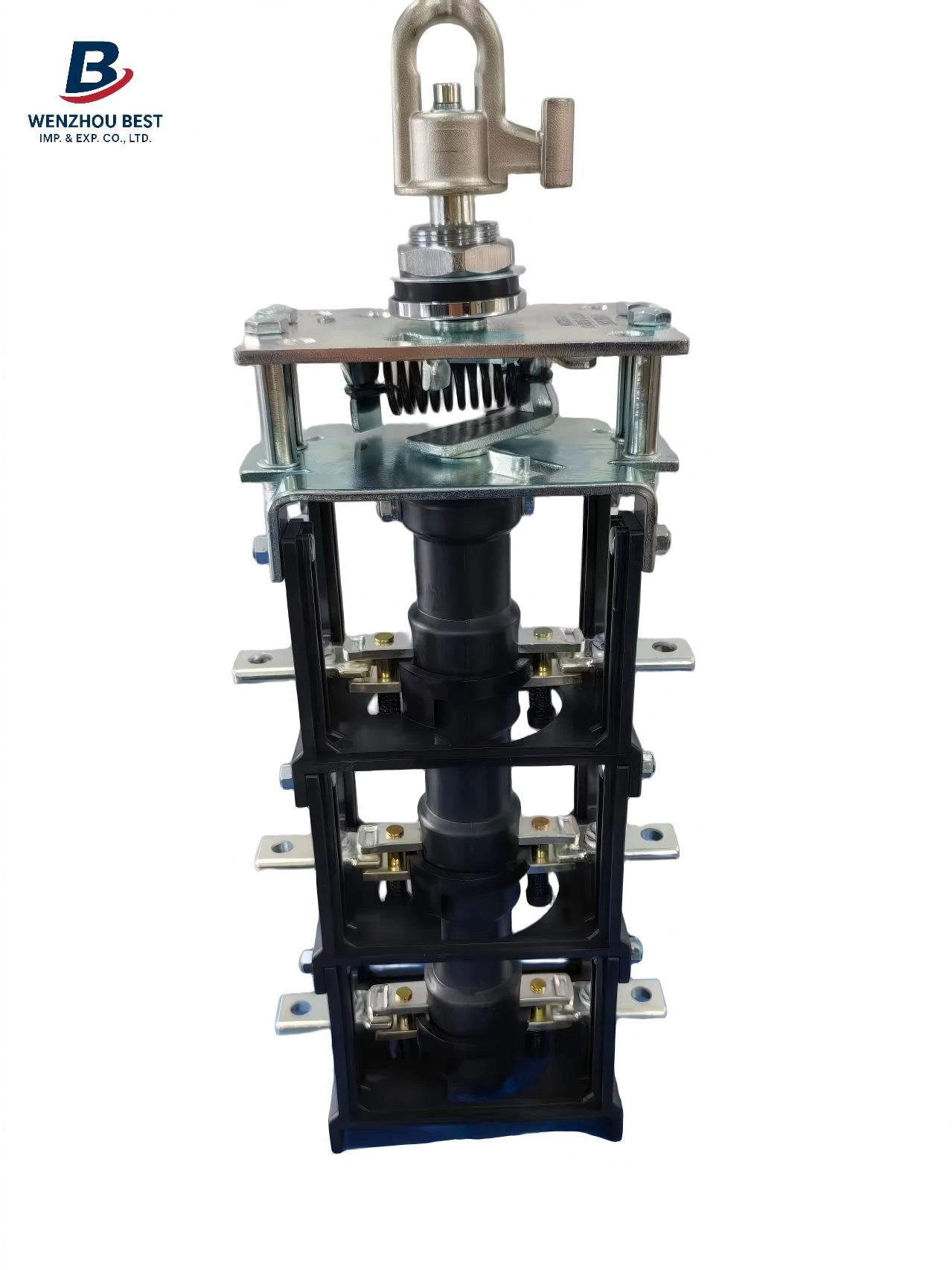
An on-load tap changer is a voltage regulating device used in power transformers to adjust the output voltage. It allows switching from one tap to another without interrupting the load current, thereby changing the effective number of turns, i.e., changing the transformer's voltage ratio, and thus achieving voltage regulation. Its schematic diagram is shown in Figure 1.

The on-load tap changer must meet the following basic conditions during operation:
(1) Ensure continuous current during switching.
(2) Ensure no short circuit occurs between taps during switching.
Therefore, during tap switching, two taps must be connected simultaneously (also called bridging) at a certain moment to ensure the continuity of the load current. An impedance must be connected in series between the two bridged taps to limit the circulating current and prevent short circuits between taps, allowing the switch to transition from one tap to the next. This circuit is called a transition circuit, and the impedance is called the transition impedance. The principle of the transition circuit is the same as that of the on-load tap changer. If its impedance is reactant, it is called a reactive on-load tap changer; if it is resistive, it is called a resistive on-load tap changer. Furthermore, since the voltage regulating transformer winding has multiple taps, a device is needed to select these taps; this device is called the selection circuit. Different voltage regulation methods require different voltage regulating circuits. To meet these requirements, the on-load tap changer circuit consists of three parts: a transition circuit, a selection circuit, and a voltage regulating circuit. These correspond to the three switching switches, tap selectors, and operating mechanisms, respectively. The switching switches are independently installed in a sealed oil chamber to prevent the insulating oil from carbonizing. This device is divided into composite and combined types. The composite type integrates the selection and switching functions, while the combined type has separate designs.