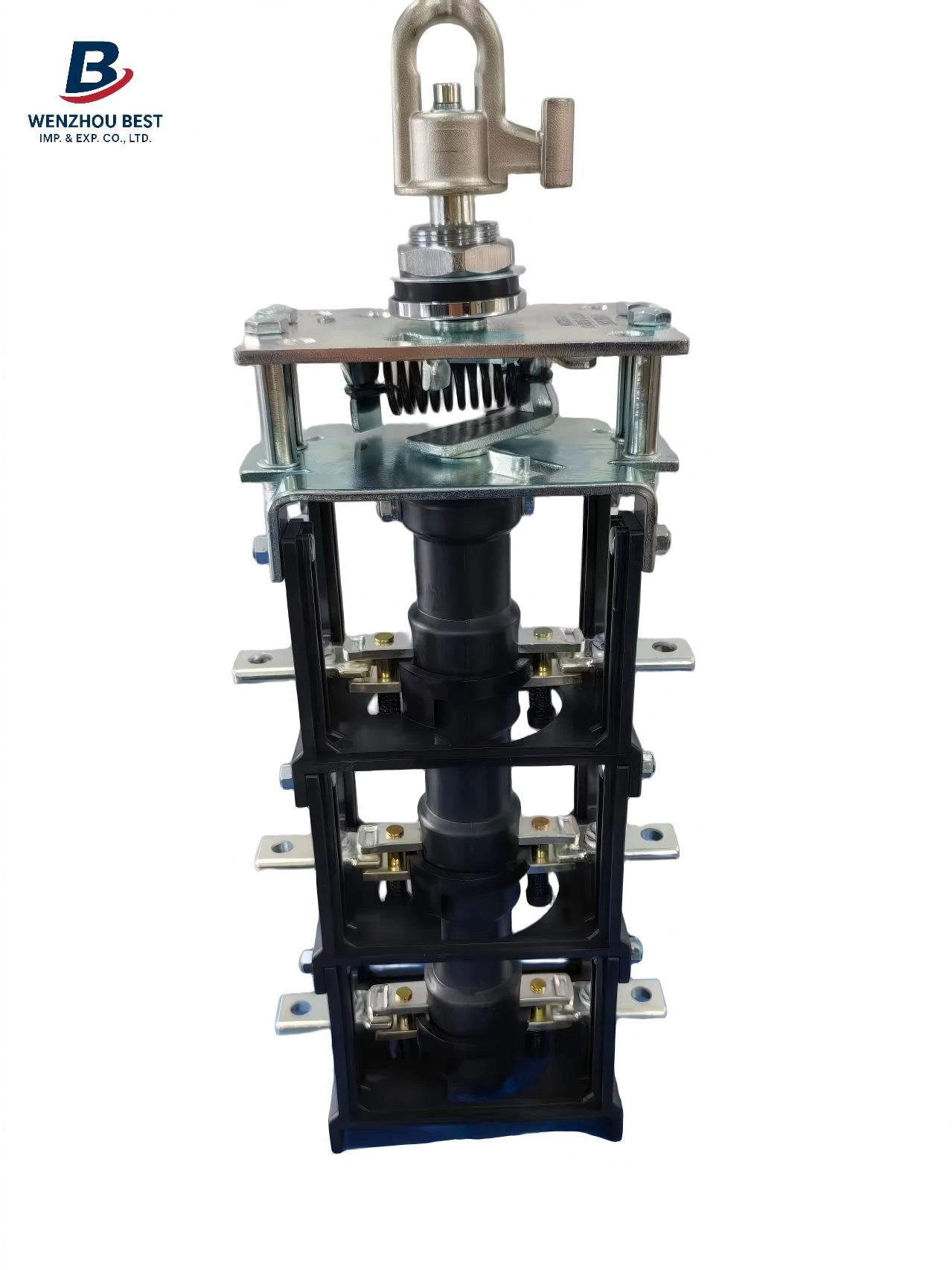
Definition
A current transformer (CT) is a type of transformer that utilizes the principle of electromagnetic induction to convert a large current on the primary side into a smaller current on the secondary side, in accordance with a specific ratio. Through this transformation, instrumentation and protective devices can safely and accurately measure and monitor high-current circuits.
Structure
It primarily consists of an iron core, a primary winding, a secondary winding, and an outer casing. The primary winding typically comprises a small number of turns or simply consists of a conductor passing directly through the iron core; the secondary winding contains a larger number of turns and is connected to a load circuit (such as an ammeter or a relay protection device); the iron core serves as the magnetic circuit, ensuring the efficient transmission of electromagnetic induction.
Characteristics
The primary functions of a current transformer include: current measurement, metering, relay protection, and providing electrical isolation between the primary and secondary circuits. It is capable of safely converting high currents into standardized low currents, thereby ensuring that instrumentation and protective devices operate normally at safe voltage levels, while simultaneously supporting the monitoring and safe operation of the power system.